Pull in tonight and look down. Gray, chalky, and a hairline crack running toward the street.
Driveway sealcoating is the one job where the careful crew and the lazy one look identical for about six weeks. Then a hard afternoon downpour comes through, the cheap coat runs off with it, gray water in the gutter, and your blacktop is bare again.
Most of our asphalt sealcoating work is residential drives around the parish, plus the odd small lot, and we are stubborn about two things: the surface gets cleaned down to bare asphalt before anything goes on it, and it has to be dry underneath, not just dry on top. Sealer bonds to asphalt. It does not bond to dust, an oil stain, or water you cannot see.
Below is what the work involves, when sealing is the wrong fix for the shape a drive is in, and what folks ask before they book. Or call (504) 607-7395 and we will come stand on it with you.
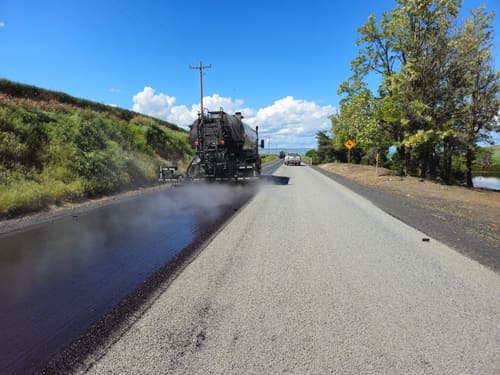
Jet Black Sealcoat
That deep black everybody wants when they pull in the driveway? It's real, and it's also temporary. Fresh sealer goes down looking wet and dries to a flat, even black, dark as a Saints jersey on a Sunday. Then our sun gets to work. Expect the true jet black to hold six to twelve months before it settles into charcoal, which is normal and not a failure.
What ruins the look is sealer stretched thin with too much water. You get streaks, brush marks and gray patches over the aggregate. We put down two measured coats, brushed into the edges, and give it 24 to 48 hours before tires touch it. Longer if the humidity won't break.
And if the surface is crumbling underneath, that's a New Orleans Asphalt Paving job, not a sealcoating job.
Asphalt Emulsion Sealcoat
Asphalt emulsion is the water based option, and it's what I reach for on most residential driveway sealcoating around here. The sealer is asphalt suspended in water with clay, fine sand and additives, so it cures by evaporation instead of soaking in. With our humidity, that matters. I want a dry window of four to six hours per coat, because a three o'clock thunderstorm over Mid-City will send a fresh coat straight down the gutter.
Two thin coats, squeegeed and cut in clean at the edges, beat one thick pour every time. Thick looks great going down and cracks like dried mud by spring.
Emulsion is mild smelling, takes foot traffic in about a day and cars in two. Fresh New Orleans Asphalt Paving needs 60 to 90 days to cure before any asphalt sealcoating goes near it.
Parking Lot Sealcoating
Driveways are one thing. A lot is a business, and the hour we close it off you've got people circling the block looking for somewhere else to park. So parking lot sealcoating gets planned around your hours, not ours. We'll do half at a time, or come in Saturday morning when the office is empty, and we're honest about the fact that a coat needs a full day of dry weather before tires touch it.
In August, that means watching the 3 p.m. thunderstorm the same way everybody else in this city does.
Oil drip zones under the stalls get degreased and primed first, or the sealer peels off in sheets by spring. Drive lanes and entrances take a second coat because that's where the turning tires scrub hardest. Then we restripe, and that's the part plenty of sealcoating companies rush. Faded ADA stalls and a hard-to-read fire lane are a problem long before they're a paving problem.
Bigger issues, like alligatored corners or a failed base, fall under our New Orleans Asphalt Paving work instead of a sealer.
Parking Lot Sealcoating And Striping
Striping is where a lot of parking lot sealcoating jobs fall apart. The seal goes down black and pretty, then somebody rolls the lines out by eye and your stalls wander like a second line down Magazine Street.
We measure off the old layout before the sealer ever comes out, so the paint goes back where it belongs. Four inch stall lines, fire lanes, arrows, and accessible stalls with a proper access aisle and symbol. We use waterborne traffic paint, set to touch in about half an hour on a dry day, longer when August humidity is sitting on us.
Sealer needs a full day to cure before paint. Rush that and the lines lift. We stripe half a lot at a time so you keep parking, and any patching first is New Orleans Asphalt Paving work we do ourselves.
Concrete Sealcoating
Here's the part nobody likes to hear: the coal tar or asphalt emulsion we use on a blacktop drive does not belong on concrete. It won't bond, it'll flake off in sheets by the second summer, and you'll be scraping black confetti out of your grass. Concrete takes a different product entirely, usually a penetrating silane siloxane that soaks in and repels water, or an acrylic film if you want the wet look.
The prep is the same religion, though. We degrease the oil drips, wash it down, and re-caulk the expansion joints with self-leveling urethane before anything gets sealed. Skip that and water sits in the joint, which in our soil means movement.
Figure a day of work, foot traffic that evening, cars back on it after two days. Slab cracked past sealing? Then we're talking New Orleans Asphalt Paving or a concrete replacement, not driveway sealcoating.
What the job involves
Every driveway sealcoating job starts with a blower, a wire broom and a stiff scrub, not a squeegee. We pull the crabgrass out of the edges, scrub oil spots with detergent and spot-prime them so the sealer actually sticks, then fill anything wider than about a quarter inch with hot rubberized crack filler. Skip that step and you have sealed water into the cracks instead of out of them, which is how a driveway goes alligator two summers later.
Then it's two coats, squeegee-pulled and brushed by hand along the garage apron and the sidewalk line, with sand mixed in for grip because a wet slick driveway in a Gentilly downpour helps nobody.
Weather runs the schedule here. We need pavement above 50 degrees, dry for a day after, so we start early and watch the afternoon pop-up storms that show up like clockwork in August.
Most residential jobs are done in a day. Stay off it overnight, keep the car off for two.
If the surface is too far gone for sealer, that's a New Orleans Asphalt Paving conversation instead, and I'll tell you straight.
What it costs
Square footage is where sealcoat pricing starts, and it's nowhere near where it finishes. A straight shot of driveway in Lakeview tapes out in two minutes. A horseshoe drive off Napoleon with a live oak root lifting one corner, an apron running into the sidewalk and grass crept in over the edges is a different afternoon entirely.
What moves the number: how much crack filling has to happen first, whether oil stains under where the truck parks need a primer so the sealer will actually bond, how badly the edges need cut back, and whether you want one coat or two. Two coats on a drive that takes daily sun is money well spent. One coat on raw, dried-out asphalt is lipstick, and by next August you'll see it.
Call us and we'll measure yours and give you a real figure, not a per-foot guess over the phone.
And if the surface is cracked past saving, sealer isn't the answer anyway. That's a conversation about New Orleans Asphalt Paving.
When driveway sealcoating is the wrong fix
Driveway sealcoating protects a surface that's still sound. It does nothing for what's underneath it. If your drive has alligator cracking, soft spots that give under a tire, or a low place still holding water two days after a rain, sealer is makeup on a bruise, and that same pattern will read right through the coat by the end of the hot months. What you want there is asphalt repair, cut out and rebuilt.
Potholes and broken-off edges need asphalt patching before anybody thinks about sealer. Cracks wide enough to swallow a pencil need asphalt crack filling, or they telegraph straight back through.
And if the drive is more patch than pavement, sealing it is throwing good money after bad. That's asphalt driveway repair, or new asphalt paving in its place.
Plenty of sealcoat contractors will spray whatever you point at. I would rather say no and seal it the year it's worth sealing.
Why choose us for this
You want the driveway sealcoating handled once, by somebody who finishes it, and then you want to stop thinking about that slab for a couple of years. What gets in the way is a figure quoted over the phone that swells once somebody is actually standing on your concrete, or a crew that opens a second job across town while yours sits half coated.
One thing that never happens on my jobs is sealer going over oil-stained spots with no primer on them, or onto a surface still damp from a shower that blew through an hour earlier. Both look sharp the day of and peel in patches by the second month. Some sealcoat contractors take that shortcut anyway, because the check clears long before the failure shows.
Cheaper sealcoat pricing usually means one thin coat and no crack work under it. Size, access, oil damage and the condition the surface has gotten into decide the figure. Having me look at it puts you under no obligation whatsoever.
Frequently asked questions
Does sealcoating fix cracks, or do I need the driveway repaved?
Sealcoat fills nothing. It's a wear layer, not a repair, so anything wider than a pencil gets routed and hot-rubber filled before we spray. If the surface is alligatored and moving underfoot, no amount of asphalt sealcoating saves it, and that's a patch or an overlay conversation instead. We handle that side too under New Orleans Asphalt Paving, and I'll tell you straight which one you're looking at.
How long am I off the driveway?
Foot traffic after about 24 hours, cars after 48, and I'd give it 72 in August when the humidity keeps the surface tacky longer. No parking in the same spot for a few days either, or you'll leave tire scuffs. We won't spray below 50 degrees or with rain in the forecast, which is why winter jobs here get rescheduled more than anybody likes.
How do we get started?
Call us and we'll come measure the drive, walk the cracks with you, and put a written scope in your hands. Weekdays nine to five.
Contact New Orleans Asphalt Paving now
Contact us now for asphalt paving and sealcoating anywhere in New Orleans, and if it's just the driveway on your mind, that's usually a day's work. The number is (504) 607-7395, somebody's here weekdays nine to five, and a message left after that gets called back the next morning. When you call, tell me the length of the drive, whether a truck can get past the gate or under a low limb, and how gray it's gone.
That's most of what I need before I come stand on it. Plenty of sealcoat contractors will quote off a satellite photo. I'd rather look at the cracks with my own eyes, because a drive that reads as merely tired from the air sometimes has a soft base under it, and no driveway sealcoating services on earth will fix that.