Potholes around here have names. A few of them have been on the same block long enough to vote, and folks steer around them out of habit like they're furniture.
Milling is how we get rid of them without tearing your whole lot to pieces. We run a grinder across the surface, shave off the tired top inch and a half to two inches, and leave the base underneath alone if it's still sound. What comes off is asphalt millings, and they don't go in a hole somewhere.
We haul them, crush them and they get a second life, sometimes as an asphalt millings driveway out in Chalmette or Marrero where a customer wants something firmer than gravel that won't wash out in a July downpour.
Here's what I promise about the people, not the machines. We call you back, from a person. We show up in the window we gave you, or you hear from me before the window closes. Nobody on my crew talks over your head about pavement, and nobody leaves a ridge of grindings across your neighbor's grass on the way out. We sweep. Every time.
Below I've laid out how an asphalt milling job actually runs, what moves the price, the millings driveway option and the questions people ask me before they book. Read on, then give us a ring and I'll come look at it myself.
Milling And Overlay
Milling and overlay is the one I recommend most, and it's simple in concept: grind off the top inch and a half to two inches of tired surface, haul the asphalt millings out, then lay a fresh mat over the sound base underneath. You keep your elevations.
That matters more here than people think, because when a crew skips the milling and just pours new asphalt on top, your curb reveal shrinks, the gutter stops draining, and water starts pooling at the door threshold every time an afternoon thunderstorm rolls through Uptown.
The order of operations is where jobs go sideways. We sweep, we tack the milled surface, and we lay while the mix is still hot enough to compact properly. Cold mix behind a slow roller never knits, and you'll see the seams inside a year.
On a mid-size lot, pavement milling runs a day and the overlay follows the next, weather permitting. Traffic's back on it once it cools, usually a few hours. We stripe after that.
Pavement Milling
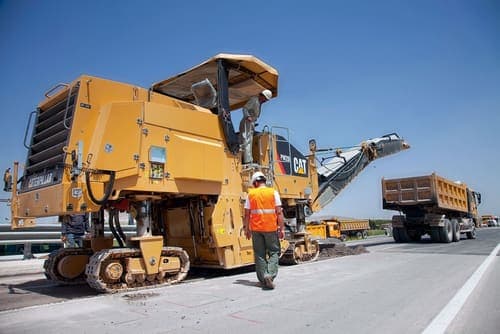
Pavement milling is grinding, and that's all it is. A drum studded with carbide teeth spins down into your lot and shaves off the top inch or two of surface, leaving a ribbed texture behind and a pile of asphalt millings that we either haul off or stockpile for reuse. No mystery to it. The mystery is in how flat the machine leaves things.
That's where a lot of asphalt milling companies get sloppy. Set the drum to a fixed depth and walk it across a New Orleans lot and you just copy every dip and hump you already had, so the water still ponds in the same spot by the dumpster after an afternoon storm. We cut to grade, not to a number, and we watch for worn teeth that leave ridges the overlay won't hide.
Depth, square footage, haul distance for the millings and how many manholes, valve boxes and curb lines need hand work around them are what move an asphalt milling cost more than anything else.
What the job involves
Milling is the part of the job most people never see, because it happens before the pretty black layer shows up. The machine rolls through with a drum full of carbide teeth spinning against the surface, and it grinds off the top inch and a half to two inches of old pavement at a set depth while a water spray keeps the dust and heat down. Behind it, a skid steer and a broom clean the surface until it's bare.
That grinding gives us a fresh, textured surface for the new mat to grab, and it means your lot doesn't gain two inches of height and end up above the curb line, with rain pooling where it used to drain.
Depth is everything. If the base underneath is soft, milling shallow just hides the problem, and by the second August of heat and afternoon downpours you'll see the same alligator cracking show back through.
The other thing that gets skipped is the sweeping. Leave fines on that surface, the tack coat can't bond, and the new asphalt peels in sheets a year later.
Most parking lots we mill get done in a day, with New Orleans Asphalt Paving following the next. The asphalt milling itself is fast. The old material doesn't get wasted either, since asphalt millings get recycled and reused rather than dumped.
What it costs
Milling gets priced by the square foot, but square footage is only where the conversation starts. Depth matters more than most people expect. Taking off an inch and a half so we can lay a fresh mat is one job. Going full depth because the base underneath has been soaking up water since the last time the Superdome roof made the news is another, and it means more tonnage on the trucks.
Access moves the number too. A machine comes in on a lowboy, and a wide open lot in Elmwood is easier to work than a tight courtyard off Magazine Street where we're cutting by hand around a dozen catch basins and a live gas valve. Manholes, curb tie ins and drain structures all mean somebody on a jackhammer, and that's time.
Then there's what happens to the grindings. Hauling them off and paying at the scale is one price. Windrowing them and reusing them on site is another, which is why a client with an asphalt millings driveway or a back lot often ends up ahead.
Call us and we'll walk the site, measure it, and give you a real figure rather than a guess over the phone.
What blows a budget is milling done blind. Cut too deep and you've bought yourself base repair. Skip the sweeping and the tack never bonds, so the new asphalt shoves in August heat.
When asphalt milling is the wrong fix
Asphalt milling is the wrong fix when the trouble is underneath the pavement. If your lot pumps water and ruts under a loaded delivery truck, grinding the top couple of inches off and laying fresh mat just gives a soft base a new hat. It ripples again by the second summer. A milling and overlay over a base that's already given up is money down the storm drain.
What that ground wants is a dig-out and real asphalt paving in the sections that failed.
Two potholes by the gate aren't a machine job either. Mobilizing a mill and a haul truck for a few square yards makes no sense. That's asphalt patching, or a saw-cut asphalt repair where the edges have crumbled away.
And if your surface is sound, just gray with hairline cracks, pavement milling is overkill. Booking an asphalt milling driveway job there grinds off asphalt with good years left. Driveway sealcoating handles it. Faded lines? That's parking lot striping. Plenty of asphalt milling companies will grind whatever you point at.
Why choose us for this
You've got a surface that needs asphalt milling and you'd like to hand it off once, not supervise it. Fair enough. Most people calling asphalt milling companies aren't shopping for artistry. They want the machine in, the old top layer off, the trucks gone, and no reason to think about that pavement again for years.
The number that swells between the phone call and the invoice usually swells in one place: haul-off. Plenty of quotes cover the cut and leave the ground-up material heaped behind your building for somebody else to deal with. Ours doesn't. And I'm not going to grind to a depth that looks tidy on top while a soft base sits under it, because the new mat will telegraph every weak spot back up by the second summer.
We're rarely the low bid on a milling driveway, and that's because sweeping and hauling are on our sheet instead of arriving later as a surprise. Depth, truck access and the condition it's got into move an asphalt milling cost. The estimate is free, and taking a look at it doesn't put you on the schedule.
Frequently asked questions
Is milling the same thing as patching a bad spot?
No. Patching cuts out a failed area and fills it back; milling grinds the surface off across the whole lot or drive, usually an inch and a half to two inches deep, and leaves a grooved base ready for new asphalt. If your surface is cracked and rutted all over but the stone underneath is still solid, asphalt milling is the honest fix. If it's one soft spot by the dumpster pad, that's a patch, and I'll tell you so.
Will milling tear up my base or my drainage?
It shouldn't, and that's the whole point of running the machine at a set depth instead of ripping everything out. We mill to grade, keep your existing slope, and pay attention to where water is already headed, because in this town water always wins. Curbs, catch basins and manhole rings get milled around, then hand-worked so nothing sticks up proud.
How long am I off it?
On a typical lot we mill and pave inside two days, and you're driving on new asphalt about 24 hours after the roller leaves. If we're leaving asphalt millings down as the finished surface, you can drive on it same day, though an asphalt millings driveway wants a few weeks of traffic and sun to knit tight.
How do we start?
Call us, we'll walk the surface with you and measure.
Contact New Orleans Asphalt Paving now
Ready to get moving on asphalt paving in the New Orleans area? Call (504) 607-7395 and tell me the address, roughly how much surface you are dealing with, and whether it is a driveway, an apartment lot or a strip center. Somebody is on the phone weekdays, nine to five, and a message left outside those hours gets returned.
What changes the number is the square footage, how deep we have to cut, how tight the access is for the machine and the dump trucks, and how many manhole rings, water valves and curb edges we have to work around. A gated courtyard behind a shotgun house takes twice as long per foot as an open lot with a wide gate.
One scheduling note worth having: pavement milling can run on a damp morning, but the overlay cannot, so on a wet week we sometimes split milling and overlay across two visits rather than pave into standing water.