The drive is still flat, just rough, gray, and shedding pebbles every time you back out.
Resurfacing a driveway makes sense when the top layer is worn out and the ground under it still holds firm. Everything in this town settles a little, that is the rent you pay for living on a river delta, but settling and failing are two separate problems.
We put down new mat over sound old pavement for homes from Lakeview out to the parish lines, and we handle paving resurfacing and blacktop resurfacing on small commercial lots too, along with parking lot resurfacing where the striping has faded to a rumor.
Here is one thing I will not do: lay fresh asphalt over a spot that flexes when you press a boot into it. That patch lets go within a season and you have paid twice.
Keep going for how the work runs, where resurfacing is the wrong answer, and the questions folks bring up. Or call (504) 607-7395 and I will come stand on it with you.
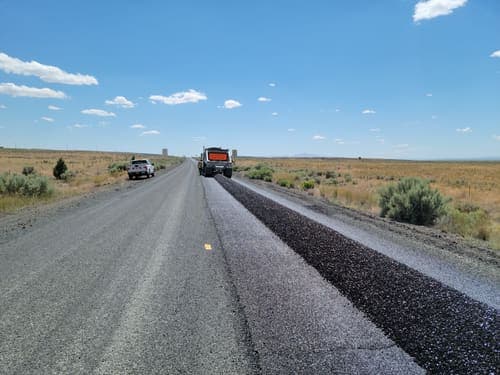
Concrete Resurfacing
Concrete resurfacing means one thing on my truck: hot mix laid over a concrete slab that's still sound. We don't do decorative skim coats, stamped overlays or any of that. If your slab is in one piece and sitting still, an overlay over the top of it holds up fine and gives you a driveway you can actually sweep.
If the panels rock under a tire, that's a different conversation.
This is a city built on ground that keeps moving, so slabs settle at the corners and the joints open up. Pave straight over that and the old cracks come up through the new surface in exactly the lines they were in before, usually within a season. So we saw out and replace the panels that have dropped first, then tack and pave.
How many panels are bad, how thick the existing slab is and whether a truck can get within a hose length of it are the things that move a concrete resurfacing cost.
The rest looks like any other asphalt paving in New Orleans: tack coat, hot mix, rolled tight to the edges.
Asphalt Parking Lot Resurfacing
A lot fails in patches, not all at once. The lane where every delivery truck cuts the corner goes first, then the dumpster pad, then the low spot that holds water for two days after an August downpour.
Asphalt parking lot resurfacing starts with milling: we cut the edges down at the entrances and against the curbs so the new mat ties in flush instead of ramping up over your gutter. Then we sweep it clean, tack it, and lay an inch and a half to two inches of hot mix, rolling while it's still hot enough to take compaction. Failed base gets cut out and patched first.
Skip that and the same alligator cracking telegraphs through your new surface by next summer.
Most parking lot resurfacing we phase half at a time so you keep selling, and striping goes back down once the mat has cured.
What the job involves
Here's what actually happens on the day.
We start by getting the surface clean and honest. That means blowing it off, pulling the weeds that came up through the cracks, and killing anything growing at the edges, because grass will find its way back through two inches of new asphalt faster than you'd believe. Then I walk the drive with you and mark the soft spots. If the base has given up, an overlay won't save it.
Around here, with our soil moving the way it does, I find failed base under maybe one drive in four. We cut those sections out square, fix the stone underneath, and compact it before anything else goes down.
Next comes tack coat, sprayed over the whole surface. This is the step that gets skipped, and it's why you see overlays peeling up in sheets a couple of summers later. Tack is the glue. Skip it and you've laid a very expensive blanket.
Then hot mix goes down, usually an inch and a half to two inches compacted, raked at the apron so the transition to the street isn't a speed bump, and rolled while it's still hot. Most residential jobs are one day. Add base repair and it's two.
One honest note. A resurfacing driveway job is not the same thing as the bucket of asphalt resurfacer they sell you at the hardware store. That stuff is a coating. This is pavement.
Give it 24 to 48 hours before you park on it, longer in August, and keep the wheels rolling when you turn for the first few weeks. Hot asphalt and a power-steering scrub don't mix.
What it costs
I can't put a number on this page and have it mean anything, because two driveways the same size in the same block can price out very differently.
Here's what actually moves it. Square footage first, then how thick we lay the overlay, usually an inch and a half to two inches of hot mix depending on whether you're parking a sedan or a work truck on it. Then the condition of what's underneath. If the base is still solid and we're just capping tired, oxidized asphalt, that's the straightforward version.
If there's alligator cracking, soft spots that pump water when it rains, or a low corner that holds a puddle for two days after a summer storm, we cut those out and rebuild them before a single scoop of new mix goes down. That's the part that changes the invoice, and it's also the part that decides whether you get eight to twelve years or eighteen months.
Access matters too. A lot of driveways here run narrow between the house and the fence line, and if the paver won't fit, we're placing by hand and that takes longer. Live oak roots are their own conversation. So is tying into the street apron and getting the height right at the garage threshold, because a resurfacing driveway job that raises the slab an inch too high sends the next hard rain straight under your door.
An asphalt resurfacer over a base that's already given up is money you'll spend twice. I'd rather tell you that up front.
Call us, tell us roughly how big the drive is and what it's doing, and we'll come look and give you a real figure for your property, not a range that shifts once we show up.
When resurfacing driveway is the wrong fix
Resurfacing driveway surfaces works on a drive that's tired, not on one that's already failed. If the slab flexes under your tire, if the cracks have webbed out into alligator patterns, if the same hole keeps reopening in the same spot after every fix, then a fresh mat laid over the top of that will telegraph every one of those faults back to the surface inside a season.
That one needs asphalt milling and a rebuild from the stone up, or new asphalt paving in place of what's left of it.
Two smaller cases. If the surface is sound and just going gray at the edges, resurfacing is overkill and driveway sealcoating is the right job. If it's one soft corner by the apron and the rest is holding, asphalt patching does it for a fraction of an overlay.
Same on a lot: if the blacktop's fine and only the lines have faded, that's parking lot striping, not asphalt resurfacing.
Why choose us for this
You have a driveway that needs resurfacing and what you actually want is to hire it out once, not stand around supervising it, and not think about that slab of asphalt again for years. Fair. Most people who call me have already had a patch let go on them, and they are watching to see whether the number on the phone grows legs by the time the invoice shows up.
Mine doesn't, because I measure standing on your drive and I tell you then what the condition and the access are going to do to the job.
I am not going to run blacktop resurfacing over a soft section that pumps mud under a loaded truck. It reappears as the same cracking inside a year and then you have paid twice.
Among the asphalt resurfacing contractors you call, I will not be the low bid. Milling down at the garage slab so the new layer doesn't sit proud and pond water takes hours some crews skip. The estimate costs nothing and commits you to no booking.
Frequently asked questions
How thick should the new asphalt layer be?
An inch and a half to two inches compacted is what a residential driveway gets from us, and two inches is what I'd want under anything heavier than a family car. That's after compaction, not what comes off the truck, since hot mix loses about a quarter of its depth under the roller. If your driveway takes a work truck or a boat trailer every weekend, tell me up front and we'll build for that instead.
What's the difference between sealcoating and resurfacing a driveway?
Sealcoat is a coating, roughly the thickness of a credit card, brushed or sprayed over asphalt that's still structurally sound. It blocks UV and gas drips and needs redoing every two to three years in our sun. Resurfacing is a real layer of hot asphalt bonded over the old one. If you can see aggregate, ruts or alligator cracking, a sealer is lipstick on a pig and won't hold.
Will my old cracks come back through the new surface?
Some can, and I'd rather say that now than after. It's called reflective cracking, and it happens when movement in the old slab telegraphs upward. We rout and fill the working cracks, mill the edges at the garage and the street so nothing sits proud, and tack coat everything. What an asphalt resurfacer cannot do is fix a failed base. If the ground underneath is soft, we cut it out first.
How soon can I park on it?
Foot traffic the same evening, cars after 24 to 48 hours. Go easy for the first month, especially in July, when a hot afternoon and a hard steering wheel turn will leave scuff marks in fresh asphalt.
How do we get started?
Call the office weekdays, nine to five, and we'll come measure and look at your base.
Contact New Orleans Asphalt Paving now
Contact us about asphalt paving and resurfacing in New Orleans while the weather is still cooperating, and we can usually get a tape on your driveway inside the week. What helps me most on that first call is rough size, whether a truck and a roller can actually reach the back of the property, and what the surface is doing now: alligator cracking, a sunken spot at the apron, edges crumbling into the grass.
Size, access and how far it has gone are what move the number, so the more you can tell me, the closer we start.
There are asphalt resurfacing contractors who will price a job they have never stood on. I would rather walk it.
Call (504) 607-7395 weekdays, nine to five. If it rings through, leave a message. It comes to me, not a call center, and I return them.
Driveways, church lots, blacktop resurfacing behind small shops from Algiers to Broadmoor. Same crew either way.